Buying your first kayak should be exciting, but the number of options turns it into a research project fast. Sit-on-top or sit-inside? 10 feet or 12 feet? Hard-shell or inflatable? Do you need a fishing kayak or a recreational one? And what about all those accessories?
Here's the straightforward guide that cuts through the noise. By the end, you'll know exactly what type, size, and features to look for — and which ones don't matter as much as manufacturers want you to think.
Step 1: Pick Your Type
There are three main types of kayaks for beginners. Each has clear strengths and weaknesses.
Sit-On-Top
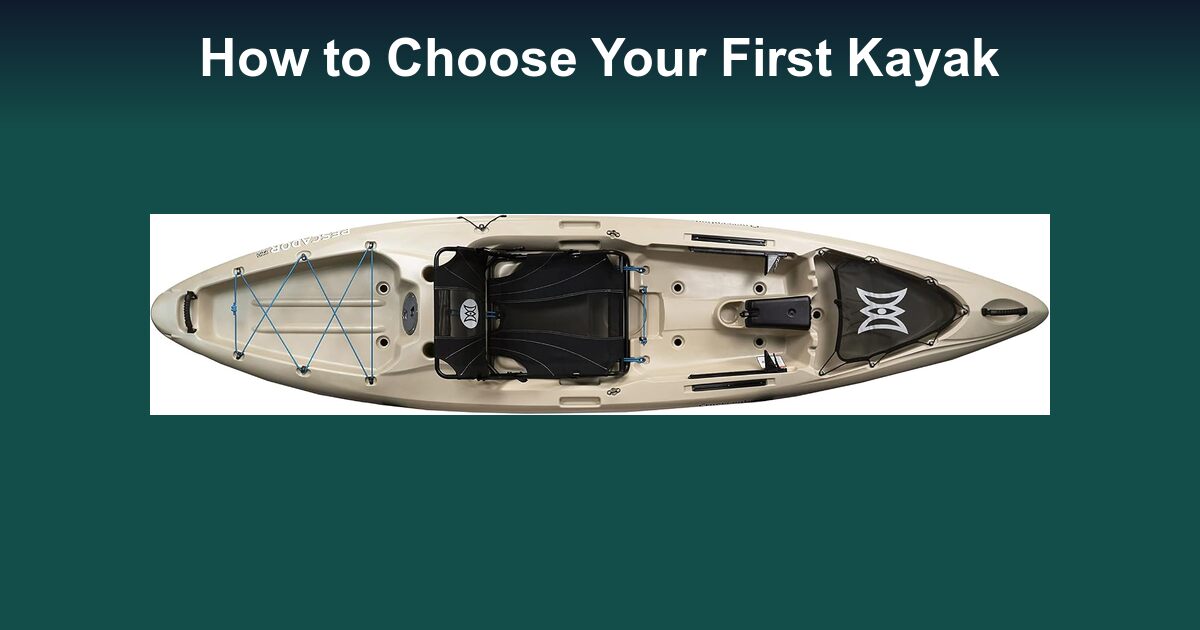
You sit on an open deck above the waterline. These are the most popular beginner kayaks for good reason — they're stable, easy to get on and off, and if you flip (unlikely on calm water), you just climb back on. Water drains through scupper holes in the deck, so they're essentially self-bailing.
Best for: Warm weather paddling, fishing, anyone nervous about feeling trapped in a cockpit, casual lake and bay paddling.
Tradeoff: You get wet. Water splashes up through the scupper holes and over the sides. On a warm day, that's refreshing. On a cool morning, it's less fun.
Sit-Inside
You sit in a cockpit with your legs inside the hull. The lower center of gravity makes sit-insides faster and more efficient. A spray skirt keeps water out, keeping you drier and warmer. They generally track better (hold a straight line) than comparable sit-on-tops.
Best for: Cooler weather, longer trips, paddlers who want to progress into touring or multi-day kayaking, anyone who hates getting wet.
Tradeoff: Getting in and out is less intuitive. If you capsize, you need to wet exit (which sounds scarier than it is) and getting back in on open water takes practice.
Inflatable
You inflate it at the launch and deflate it when you're done. Inflatables pack into a backpack or duffel and store in a closet. Modern inflatables are surprisingly capable — not pool toys.
Best for: Apartment dwellers with no storage, travelers, people without roof racks, anyone who wants the option to fly with their kayak.
Tradeoff: They don't track as well as hard-shells, take 10-15 minutes to inflate, and aren't suitable for whitewater or rough conditions. Performance is always a step behind hard-shell kayaks.
Step 2: Get the Right Size
Kayak length affects two things: speed and maneuverability. Longer kayaks track better and cover distance more efficiently. Shorter kayaks turn more easily and are more maneuverable in tight spaces.
Under 10 feet: Very maneuverable, easy to transport and store. Best for small ponds, creeks, and casual near-shore paddling. These are the easiest to handle on and off the car.
10-12 feet: The sweet spot for most beginners. Good balance of tracking and maneuverability. Handles lakes, bays, and calm rivers without feeling unwieldy. This is what most recreational kayaks measure.
12-14 feet: Better tracking and speed for covering distance. Ideal if you plan to paddle on larger lakes or do longer trips. Harder to turn in tight spaces and heavier to transport.
14+ feet: Touring and sea kayak territory. Fast and efficient but heavy, hard to transport, and designed for experienced paddlers on open water.
For your first kayak, stick with 10-12 feet. It's the most versatile range and the easiest to handle.
Step 3: Check Weight Capacity
Every kayak has a maximum weight capacity. This number includes you, your gear, a cooler, tackle boxes — everything. The general rule is to stay at least 25% below the stated maximum for comfortable, stable paddling.
Example: A kayak rated for 300 lbs handles a 225-pound total load comfortably. A 200-pound paddler with 25 pounds of gear is right at that limit.
If you're a larger paddler or plan to bring significant gear (fishing tackle, cooler, camping equipment), prioritize kayaks with 350-400+ lb capacity. Being near the maximum capacity makes the kayak sit lower in the water, reduces stability, and makes it harder to paddle.
Step 4: Consider Weight (Of the Kayak)
This is the factor most people overlook until they're standing in a parking lot trying to lift a 65-pound kayak onto their roof rack alone. If you don't have a second person to help load and unload, kayak weight matters a lot.
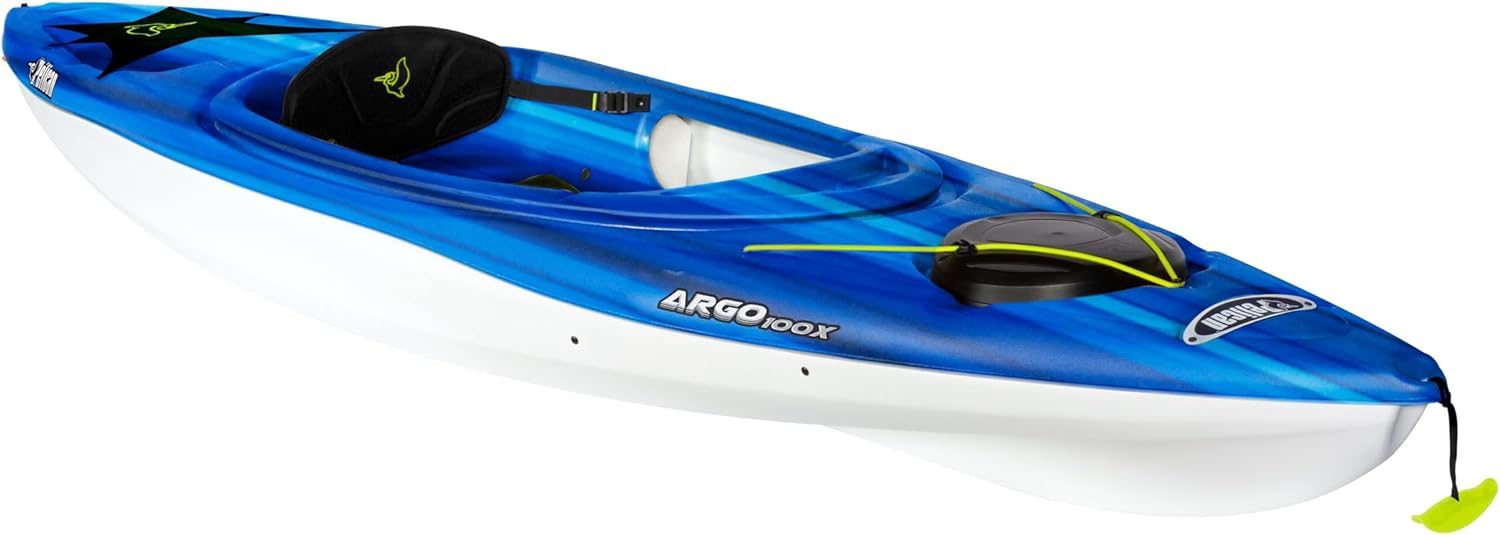
Under 40 lbs: One person can carry and load this comfortably. Pelican Argo 100X at 36 lbs is the standout.
40-55 lbs: One person can manage with proper technique. A kayak cart helps significantly for the walk from car to water.
55-75 lbs: Realistically needs two people to load on a roof rack, or invest in a loading assist system (roller pads or a J-rack system). Most fishing kayaks land here.
75+ lbs: You need either a truck, a trailer, or a very good loading system. These are serious fishing platforms.
Step 5: Think About Storage and Transport
Before you buy, answer these questions:
Where will you store it? A hard-shell kayak needs wall hooks in a garage, a storage rack, or space alongside the house under a cover. If you don't have 10+ feet of storage space, consider an inflatable.
How will you transport it? Most kayaks go on a roof rack. If your vehicle doesn't have crossbars, aftermarket racks run $100-200. J-racks carry the kayak on its side to save roof space. Trucks can just throw it in the bed. Inflatable kayaks skip this entirely — they fit in a trunk.
Can you lift it? Be honest about this. A 50-pound kayak doesn't sound heavy until you're lifting it above your head onto a roof rack. If solo loading is part of your routine, keep the weight under 45 pounds or invest in a loading assist system.
Step 6: Set Your Budget
Kayak prices range from $80 (inflatable) to $3,000+ (pedal-drive fishing kayak). Here's what each tier gets you:
Under $150: Inflatable kayaks. The Intex Explorer K2 ($120) or Challenger K1 ($80) are solid entry points. Good for discovering if you enjoy kayaking without a big investment.
$250-400: Entry-level hard-shell kayaks. Lifetime Tamarack ($300), Pelican Argo 100X ($350), Pelican Sentinel 100X ($400). These are quality recreational kayaks from established brands.
$400-600: Mid-range with better seats, features, and hull designs. Perception Joyride ($500), Pelican Catch Mode ($500). Noticeable comfort and performance improvement over budget options.
$600-800: Premium recreational and entry-level performance kayaks. Perception Pescador Pro ($700), Wilderness Systems Pungo ($750). Best seats, best tracking, built for regular use over many years.
$800+: Pedal-drive kayaks, touring kayaks, and premium fishing platforms. For experienced paddlers who know exactly what they want.
Our recommendation: Start at $300-500. You get a quality kayak from a reputable brand with a real warranty. If you paddle fewer than 5 times and don't love it, you haven't lost much. If you paddle 50 times and want to upgrade, you'll know exactly what features matter to you.
Common Beginner Mistakes
Buying too much kayak. A 14-foot touring kayak sounds impressive, but it's heavy, hard to turn, and overkill for casual lake paddling. Start simple and upgrade when you know what you actually need.
Skipping the PFD. It's the law in most states, and even strong swimmers can get into trouble in cold water. Budget $60-80 for a comfortable kayak-specific PFD.
Forgetting about the paddle. Most kayaks don't include paddles. Budget $40-60 for a decent fiberglass paddle. Cheap aluminum paddles are heavy and uncomfortable over distance.
Ignoring kayak weight. A 65-pound kayak sounds manageable until you're loading it alone at 6 AM before work. Weight affects how often you use your kayak more than any other spec.
Not testing in person. If possible, rent before you buy. One hour in a sit-on-top versus a sit-inside will tell you more about your preference than any review.
Final Thoughts
For most beginners, a sit-on-top kayak in the 10-12 foot range between $300-500 is the right starting point. It's stable, easy to use, and versatile enough for lakes, bays, and calm rivers. Add a paddle, PFD, and dry bag, and you're on the water for under $600 total.
The best first kayak isn't the "best" kayak — it's the one that gets you paddling regularly. Prioritize stability, comfort, and a weight you can handle, and you'll build the experience to know exactly what your second kayak should be.